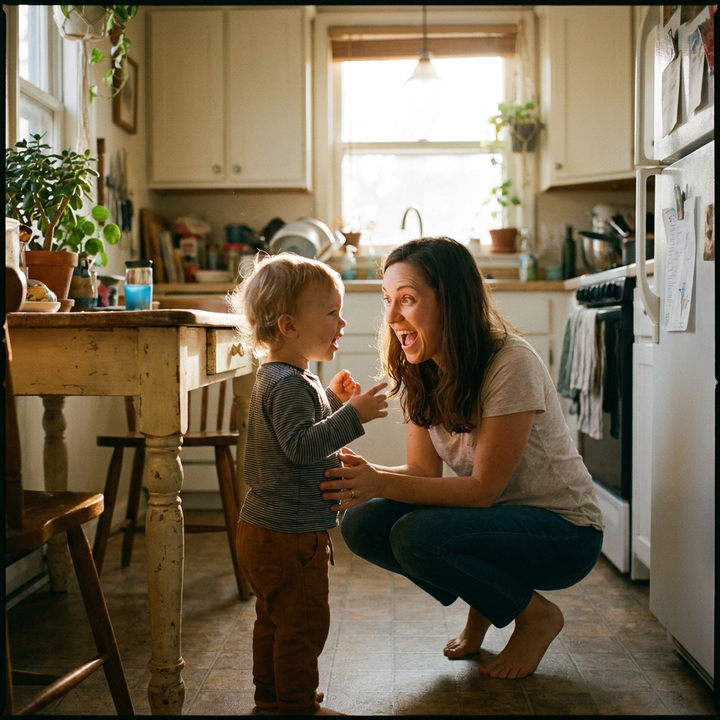
I used to describe myself as a parent who was "pretty relaxed" about screen time.
What that meant in practice was that I had stopped fighting it. My daughter Isla was eighteen months old and the iPad worked and nothing else worked with the same consistency, and I had run out of energy to feel bad about it every single time.
I still felt bad about it every single time. I had just stopped admitting it out loud.
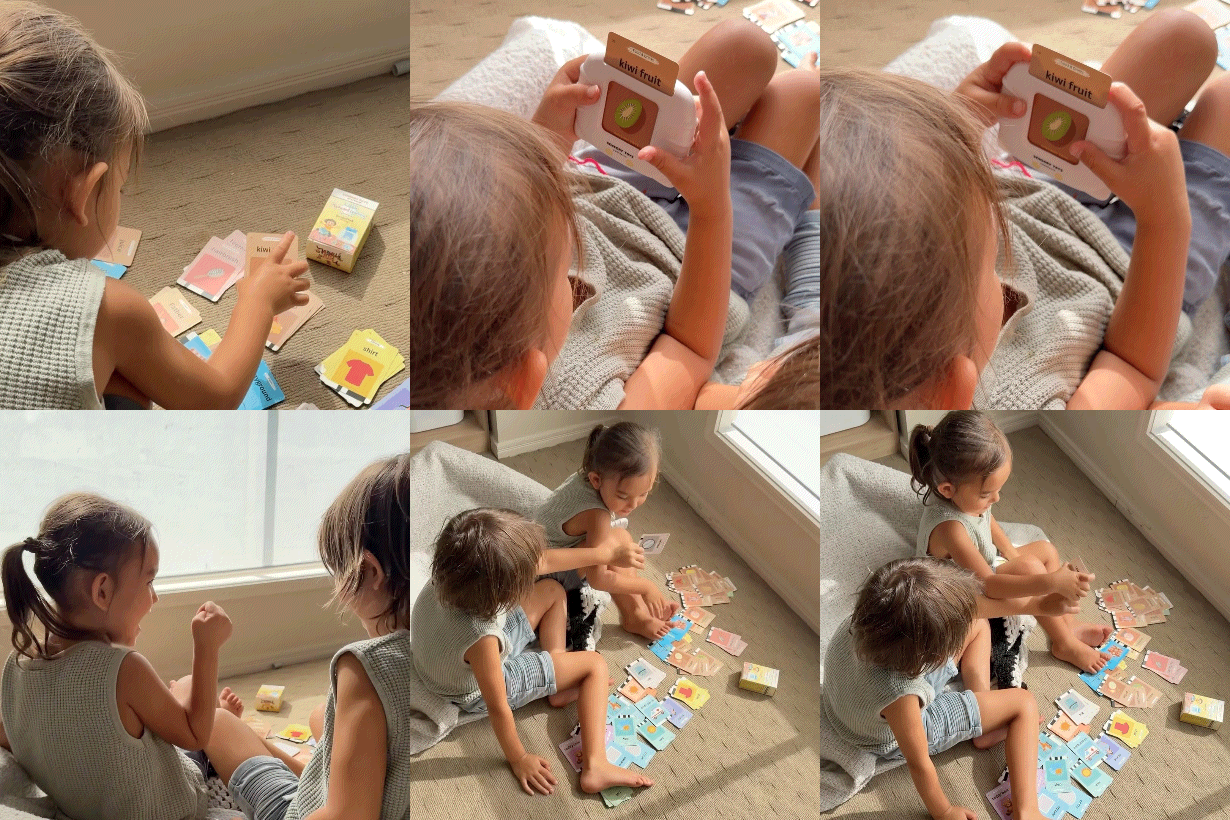
AussieMate™ arrived on a Thursday. By Friday morning Isla had been using it independently for over an hour across two sessions, and I was standing in the kitchen trying to figure out what had just happened. Here are the eight things I worked out.
Why It Works
8 Reasons AussieMate™ Does What Screens Don't
From a parent who had genuinely stopped believing anything else could
1
The mechanism is so simple it requires zero learning curve
Slide a card into the slot at the top. Hear the word. That's it. No buttons. No modes. No setup. An eighteen-month-old figures this out in under two minutes and operates it independently from that point forward. The device gets out of the way of the learning immediately — which is exactly what a good learning tool should do.
2
The child controls everything — pace, order, repetition
There is no algorithm deciding what comes next. No autoplay pulling them forward. Isla decides which card she wants. She decides how many times she slides it in. She decides when to move on. That self-direction is deeply engaging in a way that passive consumption never quite achieves — she is doing something, not just receiving something.
3
Hands are involved — and that changes everything neurologically
The act of physically handling a card, picking it up, orienting it, and sliding it into a slot activates motor-cognitive pathways that touchscreen use doesn't. Research in early childhood development consistently links physical manipulation of objects to stronger memory consolidation. The hands-on element isn't a nice-to-have. It's doing developmental work.
4.9★
Average from 37,000+ verified Australian family reviews · 50,000+ happy homes
4
The voice sounds like the people in her life
A genuine Australian accent — not processed, not approximated. When the device says "elephant," it sounds the way I say it. The way her grandparents say it. The way her educators say it. That phonological familiarity creates a comfort and engagement with the device that a foreign accent doesn't produce. She trusts the voice because it sounds like home.
5
She self-corrects — without being asked
Isla will slide a card in, attempt the word, decide she hasn't gotten it quite right, and slide the card back in to hear it again. She does this without prompting, without reward, without anyone watching. It is pure intrinsic motivation to produce the word accurately. Educational apps with their stars and sounds and congratulations cannot produce this. It comes from the simplicity of the interaction itself.
6
The animal cards include the animal sound — and children go completely feral for this
Some cards say the word and then play the corresponding sound. "Dog" — then a bark. "Cow" — then a moo. Isla has a particular relationship with the lion card that I will not fully describe here. The point is that this feature produces a delight response that keeps her coming back to the same cards repeatedly, which is also exactly the repetition that vocabulary acquisition requires.
7
No screen guilt — not even a small amount
I have thought carefully about whether I feel any discomfort watching Isla use the AussieMate™ for forty-five minutes. I don't. She is using her hands. She is hearing words. She is saying words back. She is making choices. She is doing all of the things that early childhood development research says she should be doing at eighteen months. The screen guilt exists for a reason — and that reason is absent here.
8
The vocabulary is actually building — and you can hear it
Three months in, Isla uses words she did not have before. Words I did not teach her. Words that came out of that device, in that Australian accent, through those hours of sliding and repeating. "Octopus" at nineteen months. "Ambulance" at twenty. "Firefighter" — her favourite card — at twenty-one, deployed correctly and with visible pride. The device is working. And no screen was involved.
I described myself as relaxed about screen time because I had run out of alternatives. I was not relaxed. I just did not have anything better.
I have something better now. Starter pack $49.95 with 224 cards. Expansion pack for 510 total. Australian-owned, Gold Coast, ships from Sydney in 24 hours. 30-day money-back guarantee.
Real engagement. No screen required.
AussieMate™ — hands-on, genuine Aussie accent, 510 words. 100% screen-free. 30-day money-back guarantee.
See AussieMate™ →
✔ 30-Day Guarantee✔ Ships in 24hrs✔ 🇦🇺 Aussie Owned