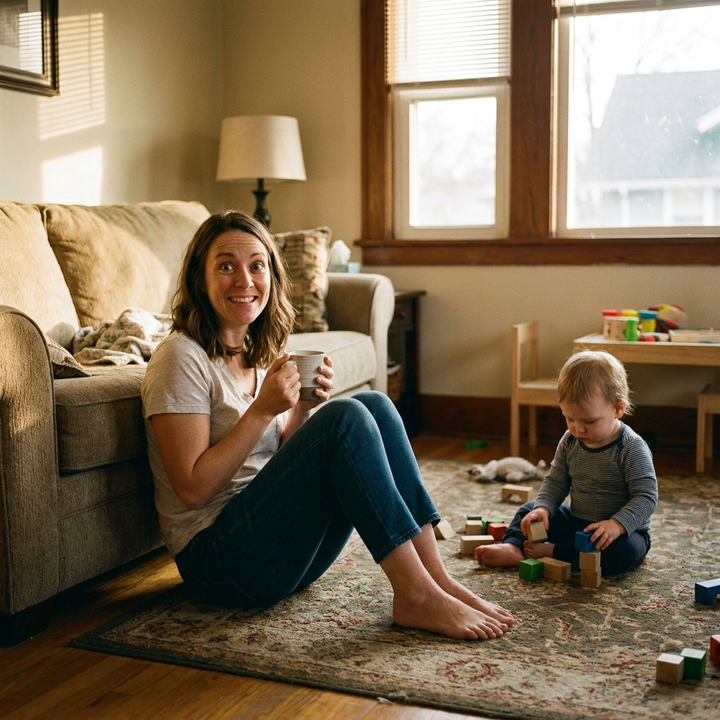
The parents I work with feel guilty about screen time, and they should feel complicated about it.
Not because tablets are evil or because every minute of screen use causes measurable damage. The picture is more nuanced than that. But the guilt exists for a reason — because parents are observing something real when they watch their toddler on an iPad, even an educational one. They are watching passive consumption rather than active engagement. They are watching a child be entertained rather than learn.
The distinction matters more in the early years than at any other point in a child's development. From eighteen months to five years, a child is building foundational cognitive and language structures. The quality of their engagement during this window — not just the quantity, but the type — has measurable effects on outcomes that persist into school age and beyond.
What the Evidence Says About Screen-Based vs Hands-On Learning
The research on early childhood media use is consistent and has been for some years. Passive screen-based consumption — even educational content — produces systematically weaker learning outcomes than hands-on, interactive, physical engagement with the same material. The effect is most pronounced under age three and remains significant to age five.
This does not mean educational apps produce nothing. It means they produce less, per unit of time, than the alternatives. For a parent who is counting minutes and thinking about how best to deploy them, this distinction is important.
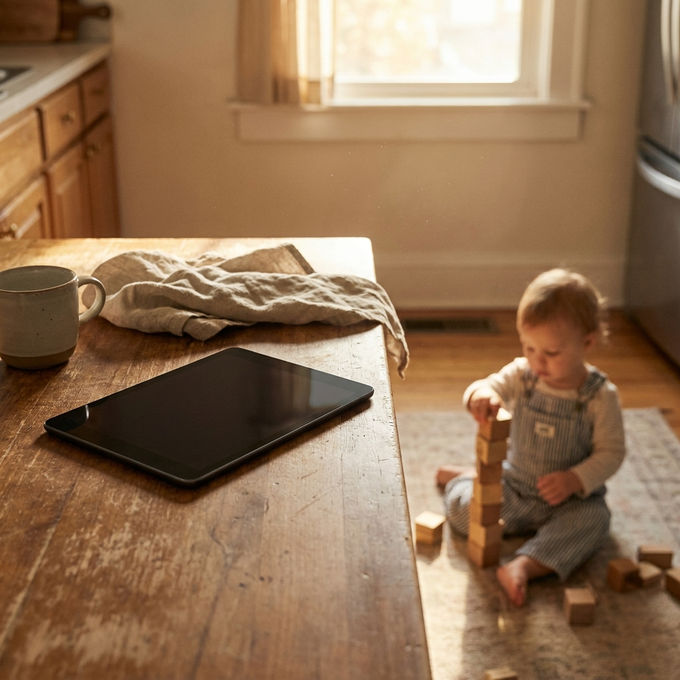
What the Alternatives Look Like in Practice
The challenge for parents is not understanding that hands-on learning is better. Most parents already know this. The challenge is finding hands-on alternatives that produce the same sustained engagement that screens do — because the practical reality is that parents need those forty-minute windows, and wooden blocks rarely provide them.
This is where AussieMate™ stands out from most of what I have seen in the early learning product space.
The mechanism is simple enough that an eighteen-month-old can operate it independently: slide a physical flashcard into a slot, hear the word spoken in a clear Australian accent, and repeat it. One action. Immediate feedback. No setup, no app, no Wi-Fi. A child can self-direct completely, choosing which cards to use, in what order, for as long as they choose.
The evidence base for this type of interaction — physical card manipulation combined with auditory feedback and active repetition — is strong. It hits the three conditions that predict best learning outcomes in this age group: physical action, auditory input, and verbal output. All three. With no screen involved.
What Makes the Specific Design Sound
AussieMate™ covers 224 words in the starter pack and up to 510 in the expansion — appropriate vocabulary range for eighteen months through to school readiness. Cards are waterproof, device is USB rechargeable, and the whole system requires no app, no Wi-Fi, and no adult supervision to operate.
For parents who feel the screen-time guilt and are looking for something that genuinely works as an alternative — not something that works almost as well, but something the evidence actually supports — this is the recommendation I am comfortable making.