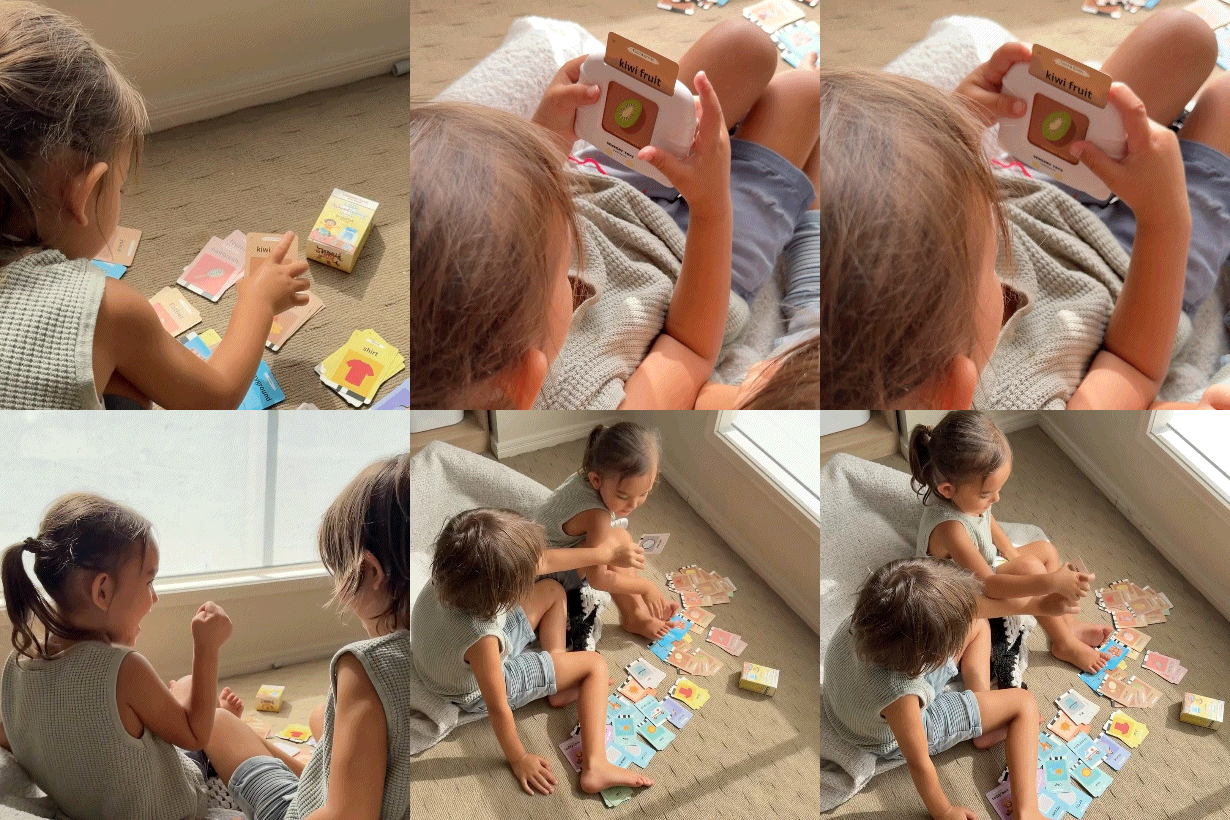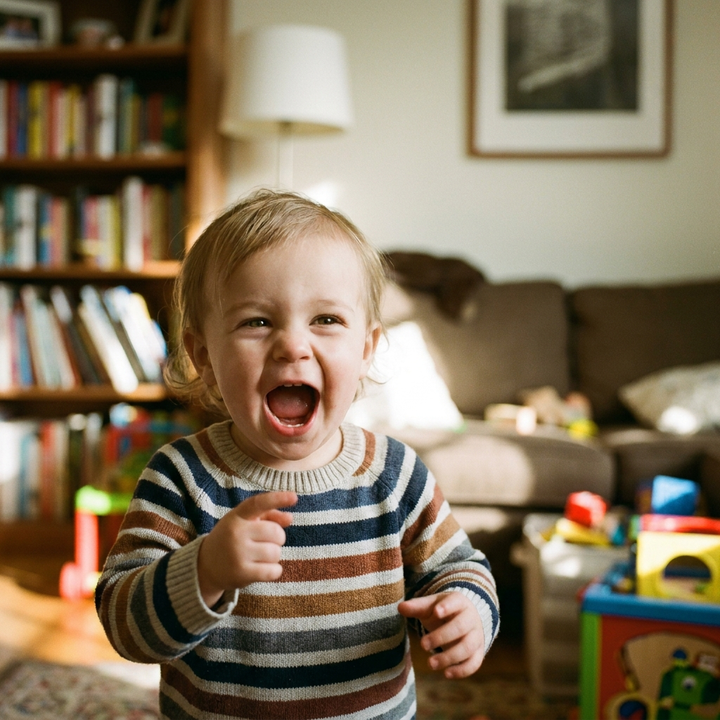
She was two years and four months old and she was standing in the kitchen pointing at the alphabet chart on the wall.
"A, B, C, D, E, F, Zee."
I did not say anything at the time. I thought maybe I'd misheard. We said "zed" in our house. I'd always said zed. Her father said zed. Her grandparents said zed. Both children's programmes she watched on the television said zed.
But she said zee. Clearly and confidently. The way a child says something they have heard many times from a source they trust.
A few days later I heard her again, and I started listening more carefully. "Garbage" instead of rubbish. "Diaper" instead of nappy — a word she had never heard from any person in her life. "Candy" instead of lollies.
I started trying to trace it. And I found it.
Where she was learning it
The flashcard reader we'd bought online — the cheap one — had an American voice
We had bought it about four months earlier. It had come with 200 cards. It was less than twenty dollars from an online marketplace. The reviews were decent. It seemed fine.
I had never listened to it closely enough to notice the accent. It was one of those things in the background — the toy was occupied, the child was occupied, the coffee was getting drunk while it was still hot. I had not sat down and actually listened to what voice was coming out of it.
When I did, it was obviously American. Not subtly American. Fully, unambiguously American — the kind of American you hear on children's YouTube channels that cater to a global audience and were never designed with Australian children in mind.
Finding something better
I started looking for an Australian version of the same concept
I did not want to take away the flashcard reader entirely. Willow loved it. The concept was sound — physical cards, one action, immediate audio feedback. She was engaged with it in a way she was not engaged with most of her other toys. I just needed one that sounded like us.
I found the AussieMate™ after about half an hour of searching. It was Australian-made, designed on the Gold Coast, and the product page was very clear about the accent — not just Australian, but genuinely Australian. Not a processed approximation of an Australian accent, but an actual Australian voice.
I ordered it the same evening.

What happened when it arrived
The first word Willow heard from it, she looked up at me
I don't know how to explain this other than to say that I watched my daughter have a small moment of recognition the first time she used the AussieMate™.
The first card she slid in was the dog card. The device said "dog" — and she looked up at me. Not in confusion. In something more like confirmation. Like she was checking whether that was the same word. Whether the voice matched what she knew.
It did. Because it sounded like everyone she had ever heard say "dog" in real life.
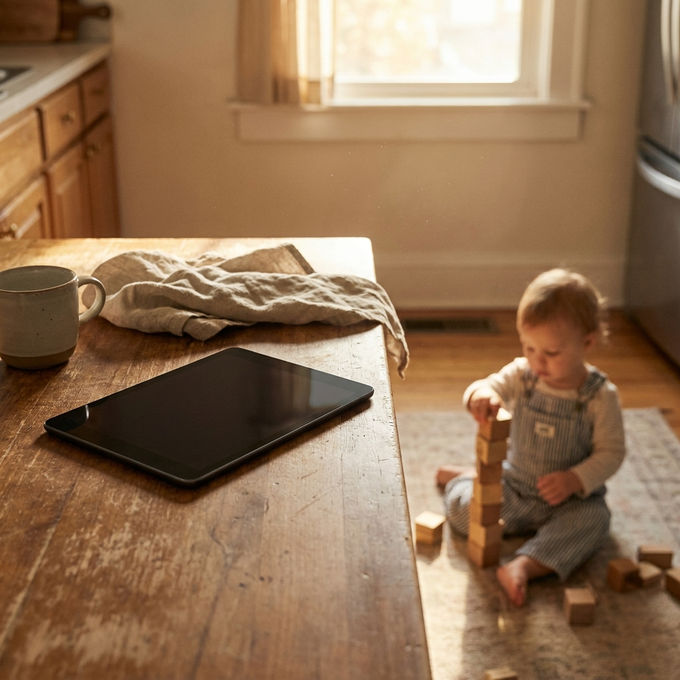
Within a few weeks, "zee" was gone. Zed was back. Nappy was nappy again. Lollies were lollies. The American vocabulary she had absorbed from the other device faded as the Australian replacements took over.
And she was just as engaged with the AussieMate™ as she had been with the original — actually more so, I think, because the cards are better quality. Waterproof, durable, the same cards now six months later and they look brand new. The device itself has more vocabulary too — up to 510 cards in the expansion pack, compared to the 200 we had before.
The starter pack is $49.95. Expansion pack available separately. Ships from Sydney within 24 hours. 30-day money-back guarantee, no questions asked.
I don't think I would have noticed the accent problem if Willow hadn't gotten to the letter Z and said "zee." I would have kept assuming the toy was doing something useful. It was doing something — just not the thing I thought.
The voice matters. I know that now.